Historical story · 3 min read
Over the wall: the Belgic Confession’s journey into Tournai’s castle
On the morning of 2 November 1561, a parcel was found inside the castle walls at Tournai. It contained a confession of faith. The delivery was unusual because the people who wanted their beliefs heard had reason to fear the authorities receiving it.
Published
A delivery in the night
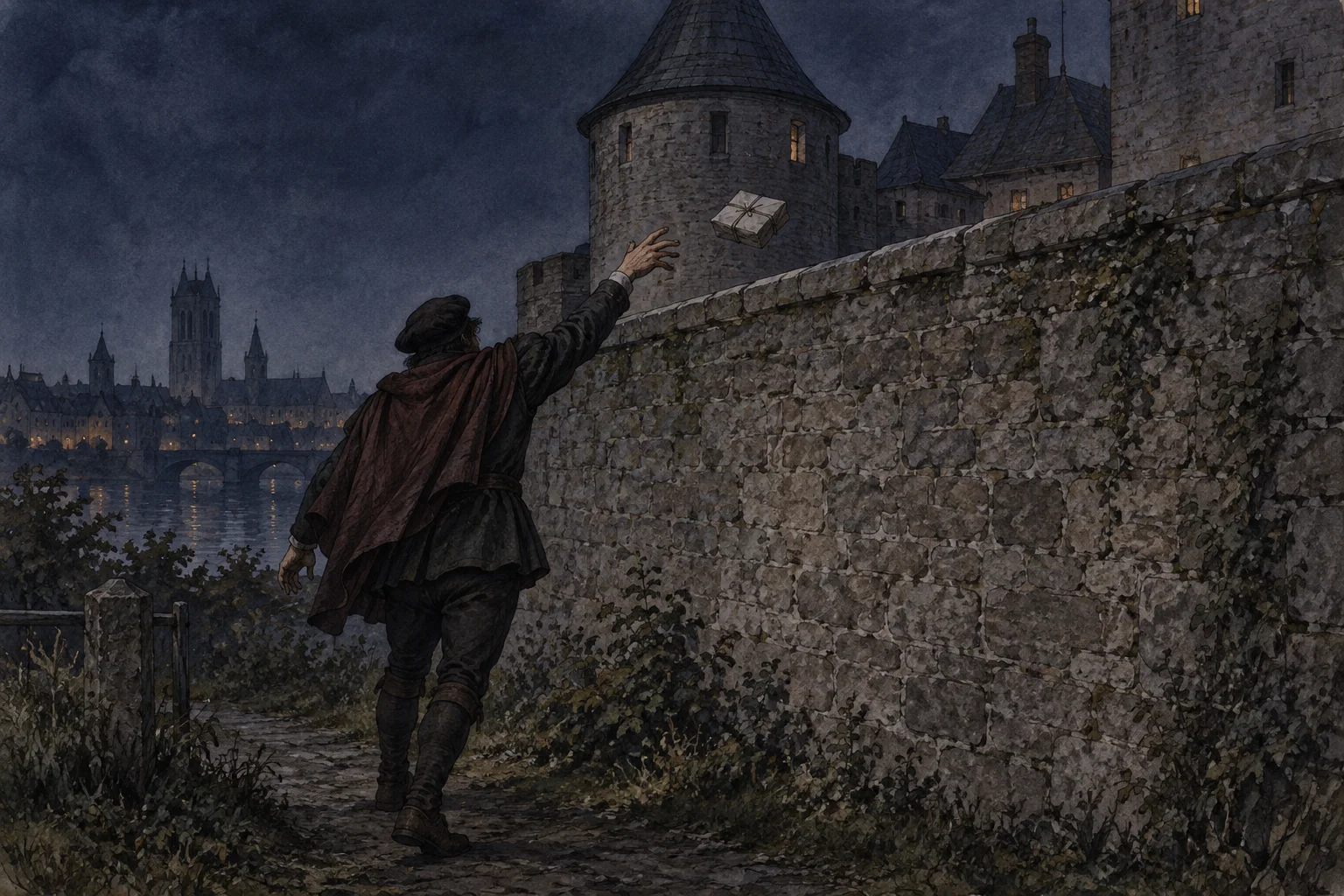
During the night of 1–2 November 1561, a wrapped copy of the Belgic Confession was thrown over the castle wall in Tournai, also known by its Dutch name, Doornik. Hendrik L. Bosman’s historical discussion recounts the delivery. Sending a packet allowed its carrier to put the Reformed community’s beliefs before the authorities without presenting himself openly.
The following day’s discovery left a written record. Historian Karin Maag describes the surviving report to Margaret of Parma: the booklet had been found and read. The people inside the castle had received the message, even though its delivery revealed little about the messenger.
Was the messenger Guido de Brès?
Guido de Brès was the confession’s principal author. That does not settle the identity of the person who carried the parcel. Maag leaves open whether the messenger was de Brès himself or another Reformed leader. Arjan de Visser’s account of the Tournai locations likewise allows for de Brès or a helper.
The uncertainty leaves a small but revealing gap in the story. We can follow the confession into the castle and know whose teaching it expressed, while the person who brought it remains out of view. The illustration follows that anonymous messenger; its buildings and surroundings are imagined.
The point of sending a confession
The packet belonged to a wider effort to explain Reformed belief and answer accusations of rebellion. The confession and its accompanying appeals asked the authorities to consider what these Christians actually taught. Under persecution, being mistaken for a dangerous rebel was no small matter.
The contents were also substantial. The confession’s 37 articles address God, Scripture, Christ, salvation, the church, and public life. A reader opening it encountered an ordered account of faith, not merely a demand to be left alone. The reading map shows the breadth of that account.
That breadth is worth noticing. A statement sent to hostile readers could still serve believers themselves, giving them a common way to explain their convictions. A confession could speak outwards and inwards at the same time.
What the wall story helps us see
The familiar phrase “we believe” sounds different when placed beside this delivery. It represents a community trying to speak intelligibly under pressure. The story gives a concrete setting to a document that can otherwise look like a timeless list of theological propositions.
The appeal did not bring persecution to an end. De Brès and his fellow pastor Pérégrin de la Grange were executed in May 1567, as Maag’s account records. The confession outlived its author and became a lasting statement of faith for Reformed churches.
Read the broader history of the confession, then turn to Article 27, with its description of a church that can appear vulnerable while trusting God’s preservation.
Sources and further reading
These guides explain the text from a Reformed perspective. They are original editorial commentary, separate from the historic confession and its published translation.
- Karin Maag: Confessions: Past, Present, and FutureHistorical account of the packet, the uncertain carrier, and the report to Margaret of Parma.
- Arjan J. de Visser: Tracing Guido de Bres in DoornikTournai’s historical locations and the night of the delivery. Published in Clarion in 2011.
- Hendrik L. Bosman: Die Nederlandse Geloofsbelydenis / Confessio Belgica en die Bybel in 1561NGTT 53, numbers 3–4 (2012). The discussion on page 9 and footnote 20 address the delivery and its uncertain carrier.
- The complete Belgic ConfessionThe text whose contents and reception give the incident its significance.